The prints, the problems, and the small changes that bring a mystery off the screen.
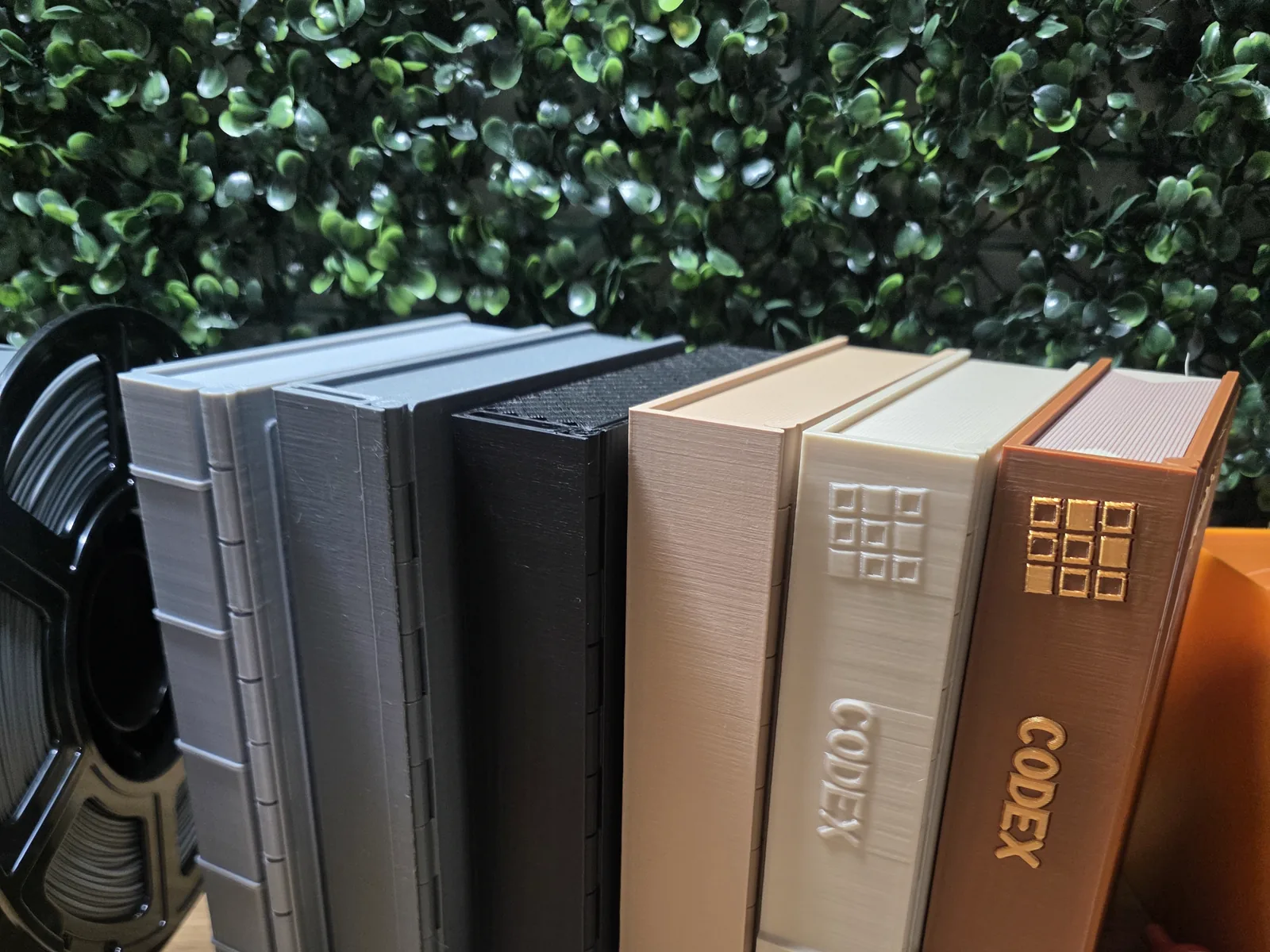
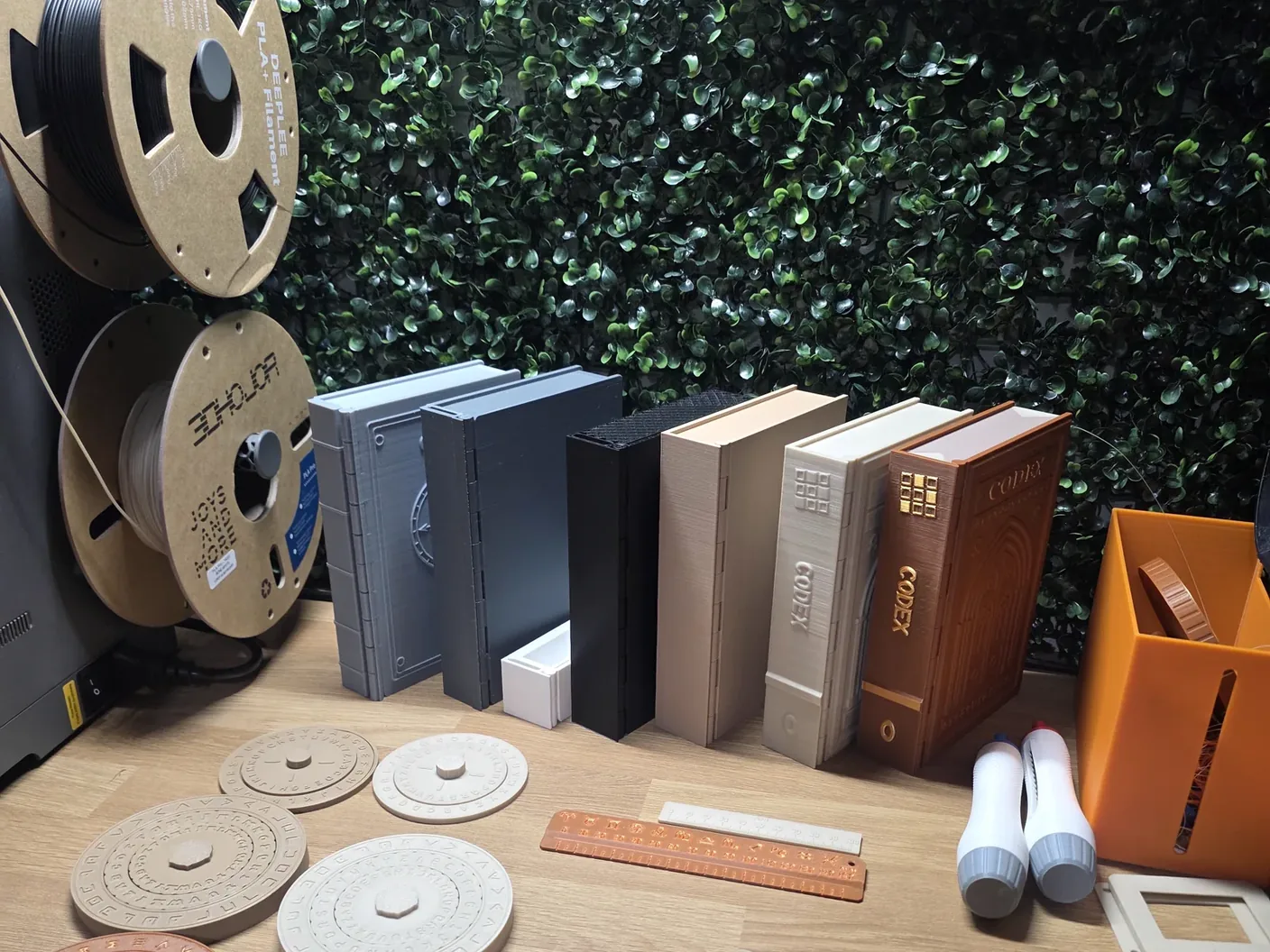
Early print photograph · 11 September 2026Successive case prints make the design changes visible. They are development objects, not finished stock.
A desk full of ideas.
Before the hands-on build, I spent roughly two months thinking about the project and making sketches. By the time I began this diary on 12 September, about another month had gone into shaping the game, its puzzles, the player interface and the printed objects, with enough prototypes on my desk to start keeping a proper record.
The Printed Secret brings together mysteries you can play in a browser and physical books and objects you can make and handle. The free Apprentice’s Test is the introduction and needs no printer. The larger physical experiences are still being developed.
At the centre of that physical side is the Codex: a reusable, 3D-printed book with tools and reference markings. It is something to use during an investigation, rather than a book of solutions.
Getting it from a design on screen to an object that works in your hands has meant a lot of versions. A case can look right and still feel too loose when it comes off the printer. Lettering can look clear in a render and become fragile when it is sliced. A moving part has to print, release, fit and survive being used.
One earlier case runner and latch printed too loose. That led to a revised full-size tool pack with changed clearances and catches. That is the sort of detail I want to record here: the problem, the change, and what still needs testing.
The browser side has been changing too. It now reads more like a book you are working through, with earlier completed pages available to turn back to. That connection between the object on the table and the page on the screen is what I want to keep developing.
So this is a record of the build as it happens: useful prints, awkward fits, discarded ideas and small improvements. The next stage is about putting the parts to work together, and finding out whether they make sense to someone encountering them for the first time.
The diary began on 12 September. The timeline below includes the earlier planning and continues through the latest development work.
Jon Making The Printed Secret
Selected milestones
The work behind the work.
· 18 selected milestones
From the first ideas and sketches to print tests and the latest game builds, in the order the work unfolded. Early dates are approximate and based on my recollection; later dates come from photographs and completed development records. Captions distinguish photographs, artwork and representative game screens.
Approx. Jul–Aug 2026Ideas and sketches
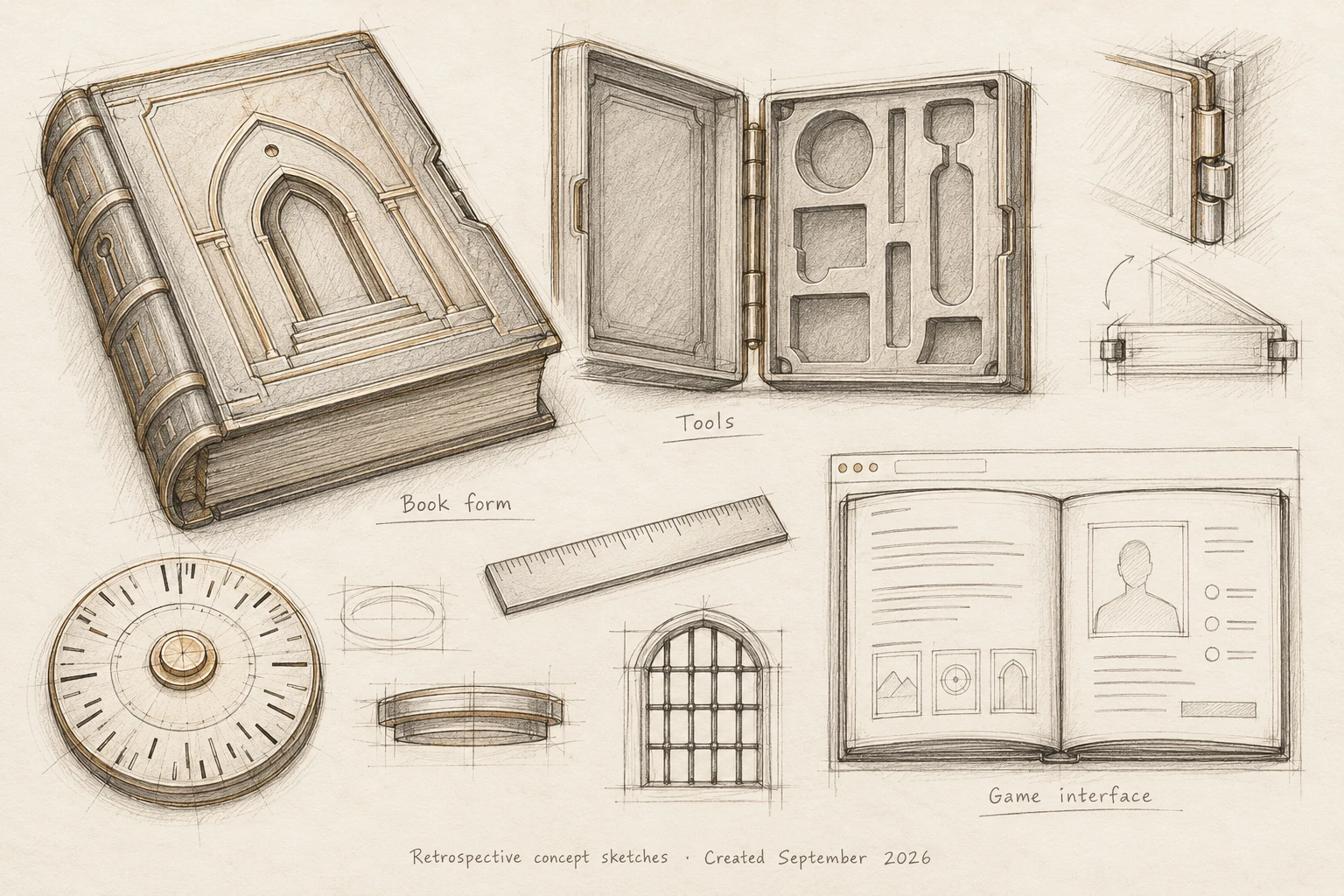
Retrospective concept illustration · Generated 30 September 2026A new sketch sheet illustrating the book, tools and interface ideas; not an original drawing from July–August.
Creator recollection · recorded 30 September 2026
Before the first print
For roughly two months before September, I was thinking about what this project could become and making sketches. That early work belongs here too: it was the start of the project, before the printed prototypes and the game builds that followed.
Where it began: ideas and sketches that led into the hands-on development.
Early buildBuilding the private workshop
Development history · recorded 2 October 2026
Building Roomsmith
Alongside the books and tools, I built Roomsmith: the private workshop behind The Printed Secret. It is where I shape each game's story, connect its puzzles and discoveries, organise hints and artwork, and prepare the instructions players will need. It gives me a way to see how an investigation fits together and test the journey as it develops.
Behind the scenes: Roomsmith builds the experiences; it is not something players need to install or learn. Players meet the finished story through The Printed Secret's browser experience and, where required, its physical books and tools.
Early buildGame & puzzle design
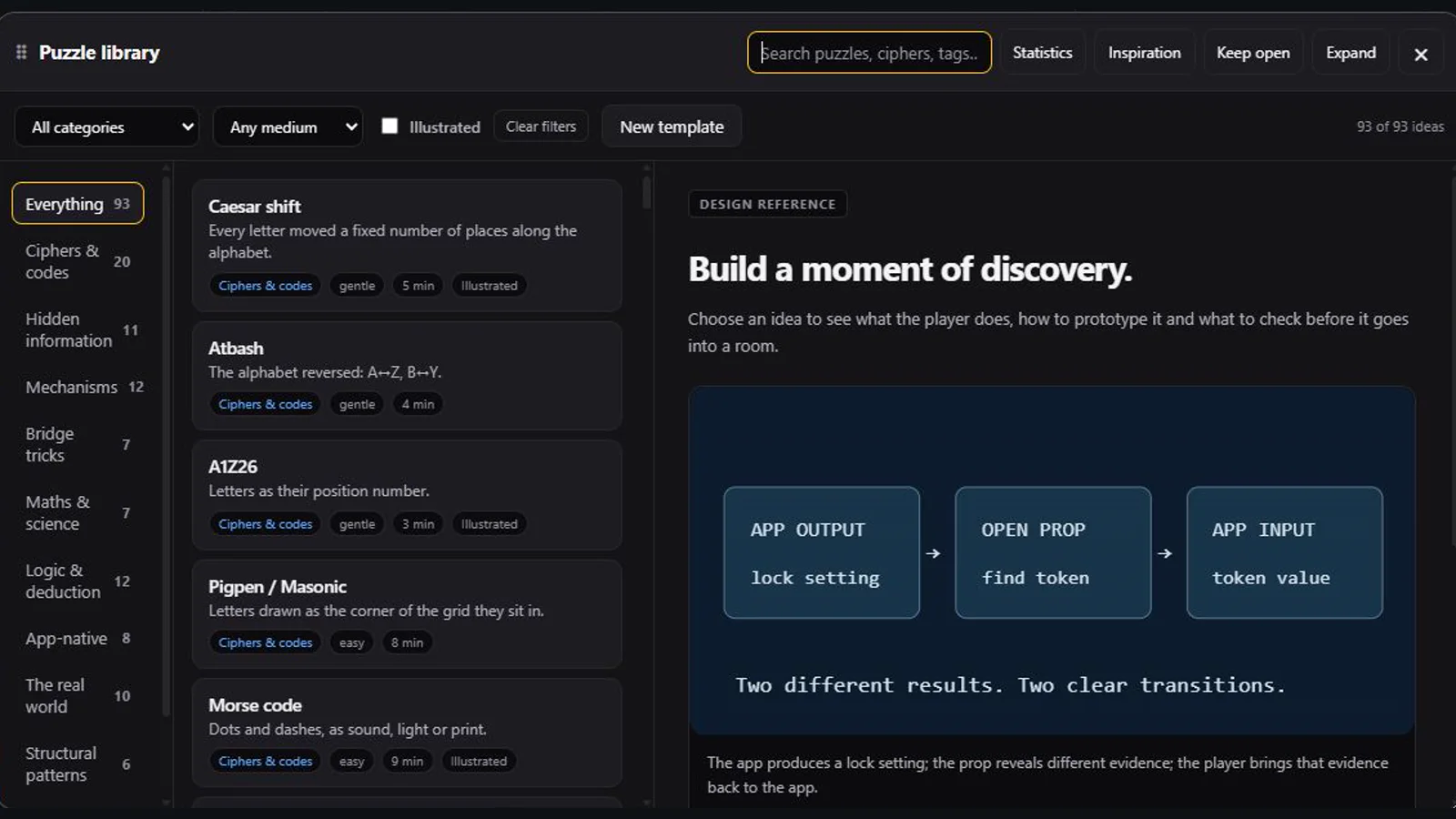
Current representative viewA spoiler-free view of the puzzle-design workspace. It represents work begun in the first weeks; it is not an archival screenshot from day one.
Starting with the experience
The first task was to shape what players would discover: the story flow, the rhythm of the puzzles, and the moments where a browser action should lead to something physical and back again.
What this established: the experiences are the product. The printed books and tools exist to serve the investigation.
First print tests
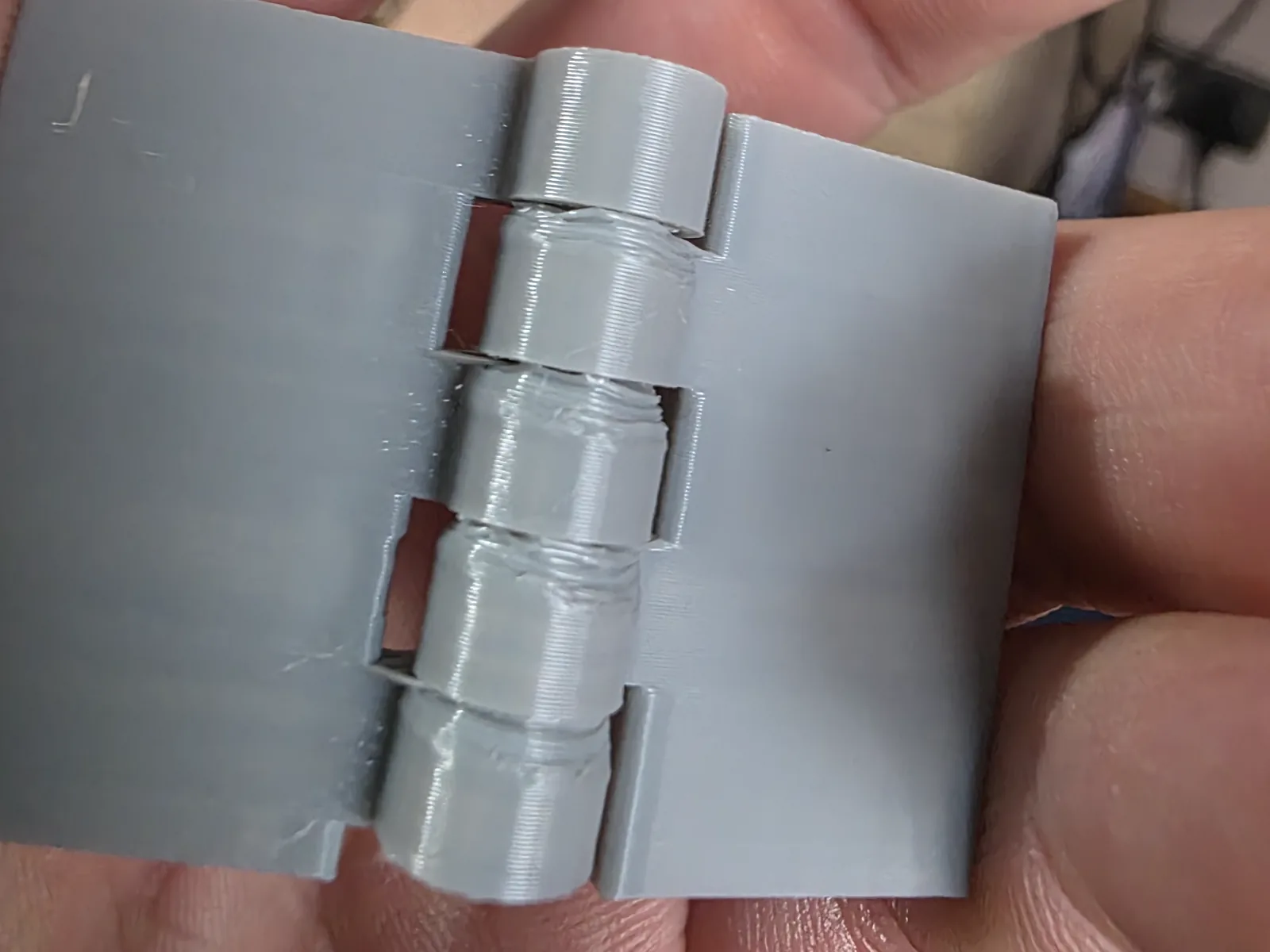
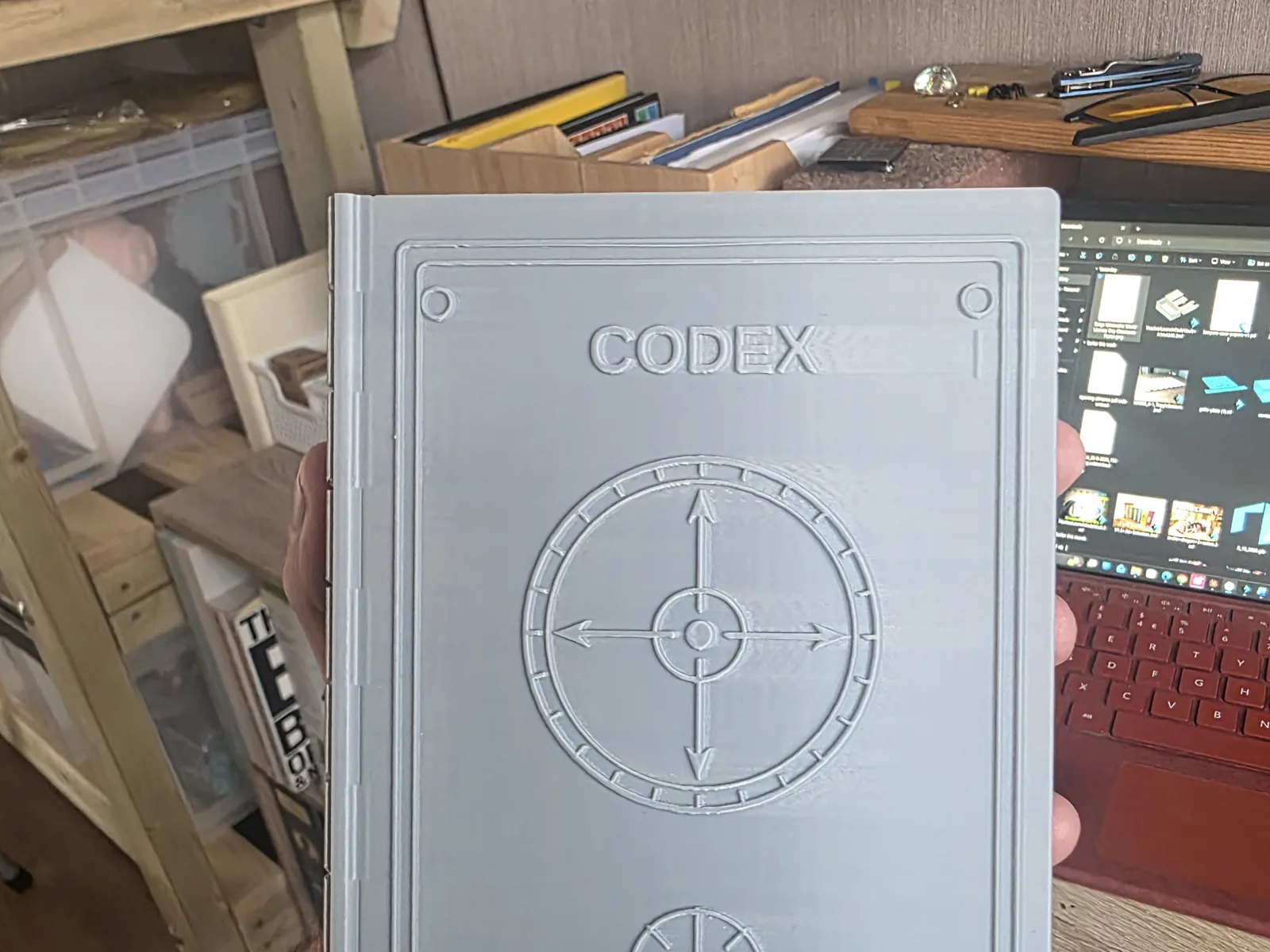
Prototype photograph · 29 August 2026The failure is the useful part of this photograph.
The first printed lesson
The earliest photographs show grey fit and hinge tests. A case runner and latch printed too loose, turning what looked plausible on screen into a clear physical problem.
What changed: clearances and catches were revised for the next full-size tool pack. The new physical fit still needed testing.
Early Codex shell
Prototype photograph · 30 August 2026The book form was present, but its details and engineering were still moving.
The book form arrives
The early shell established the scale and the basic idea of a reusable book-shaped case. It was a physical checkpoint, not a finished design or proof that the later internal changes would print successfully.
What remained: hinge behaviour, storage, finish and repeated handling all needed further iterations.
Environment art study
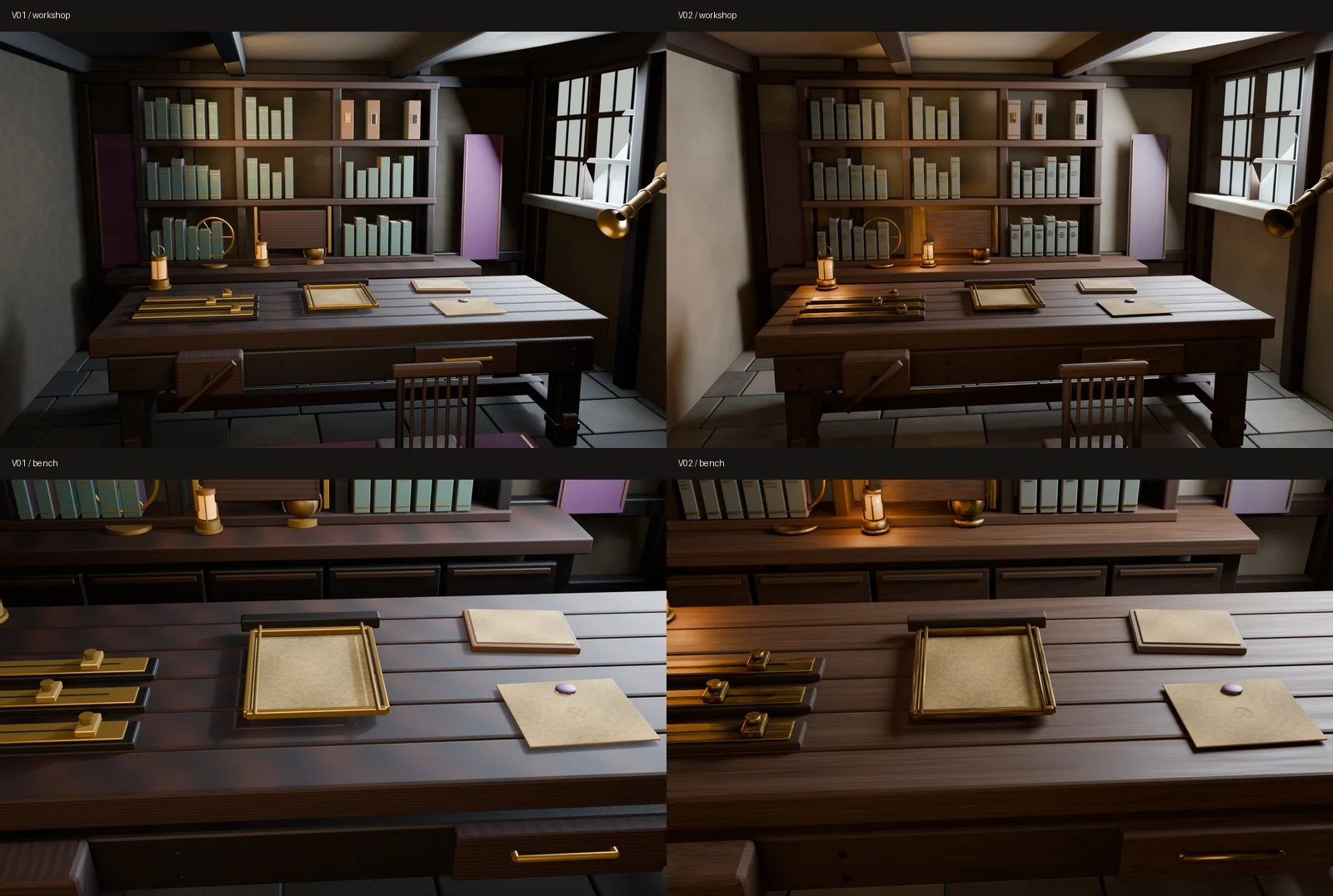
Historical development rendersA material and lighting study using the same room geometry. Jon later chose to keep the existing painted workshop artwork.
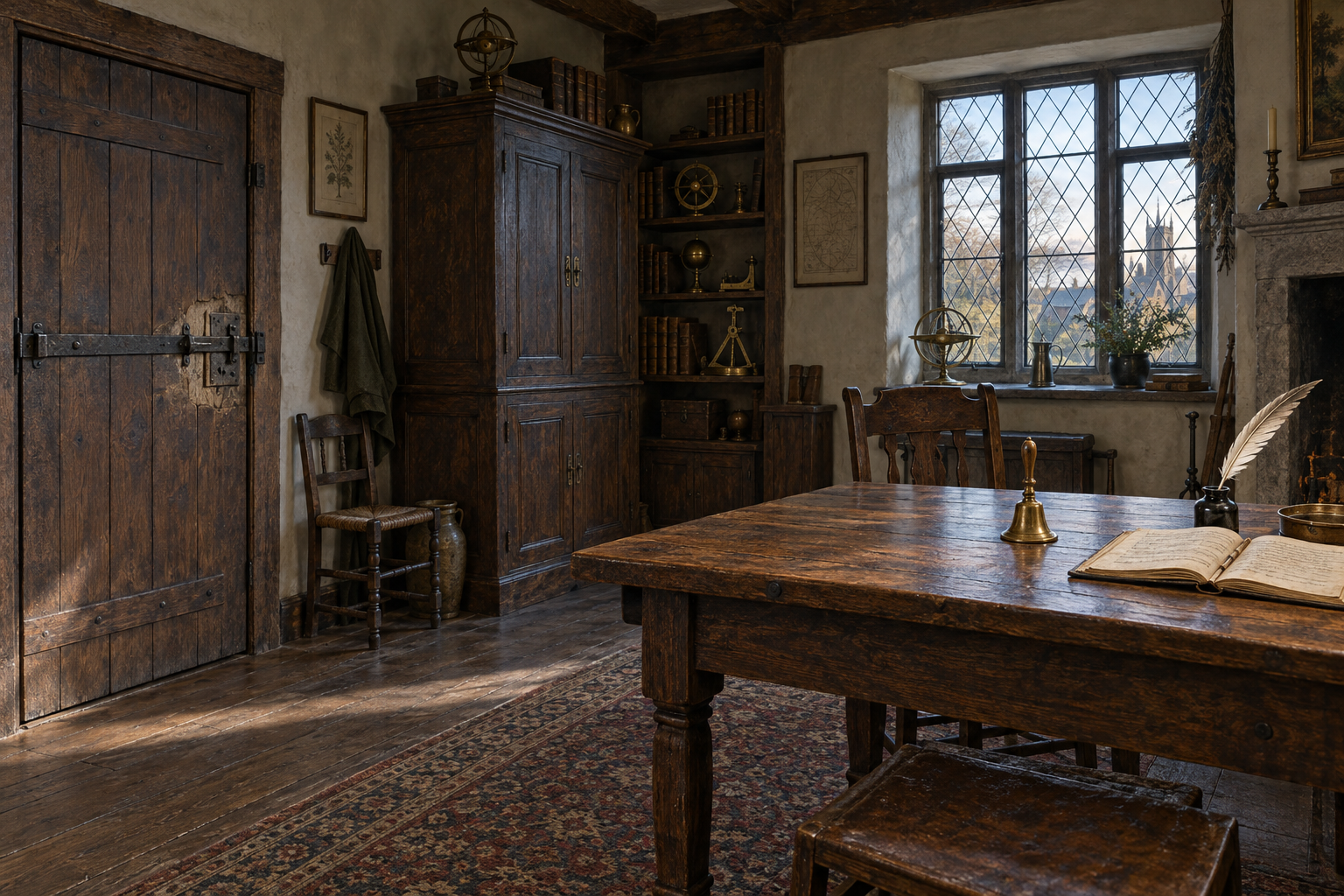
Testing the atmosphere
The workshop was rebuilt as a visual experiment with walnut grain, aged brass and warmer lamp light. Comparing both versions made it easier to decide what felt tactile, readable and right for the story.
What it decided: the study sharpened the visual direction, even though it did not replace the game’s painted room.
Shared opening sequence
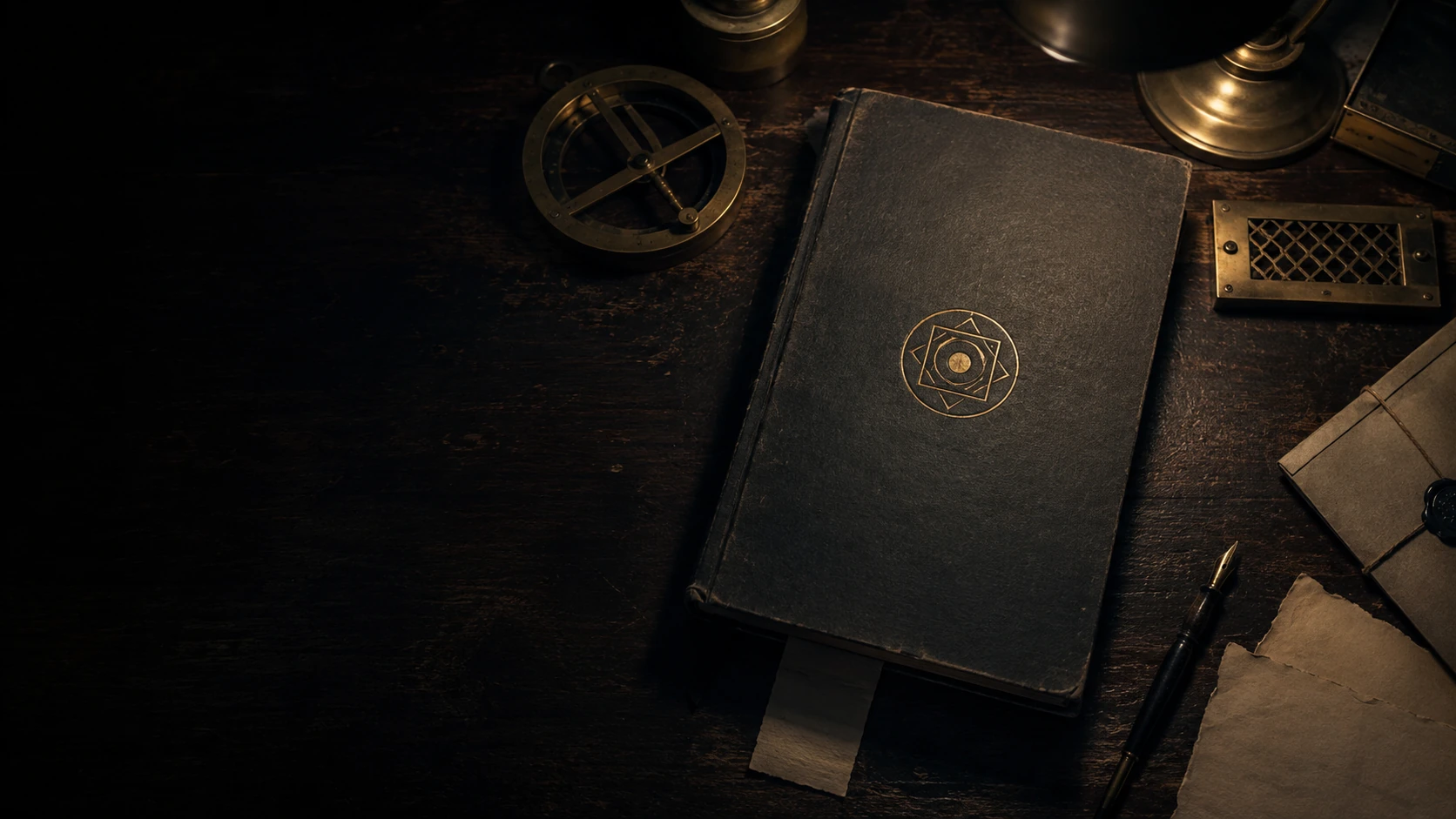
Illustrative brand artworkA still from the 15-second opening approved and locally integrated on 9 September. It is not a photograph of the physical Codex.
Giving every game a shared opening
A short brass-and-book sequence now leads into each room while preserving the room’s own introduction and the player’s Resume path.
What stayed intact: each mystery still opens into its own space. The film is a frame around the experience, not a substitute for it.
Codex refinement
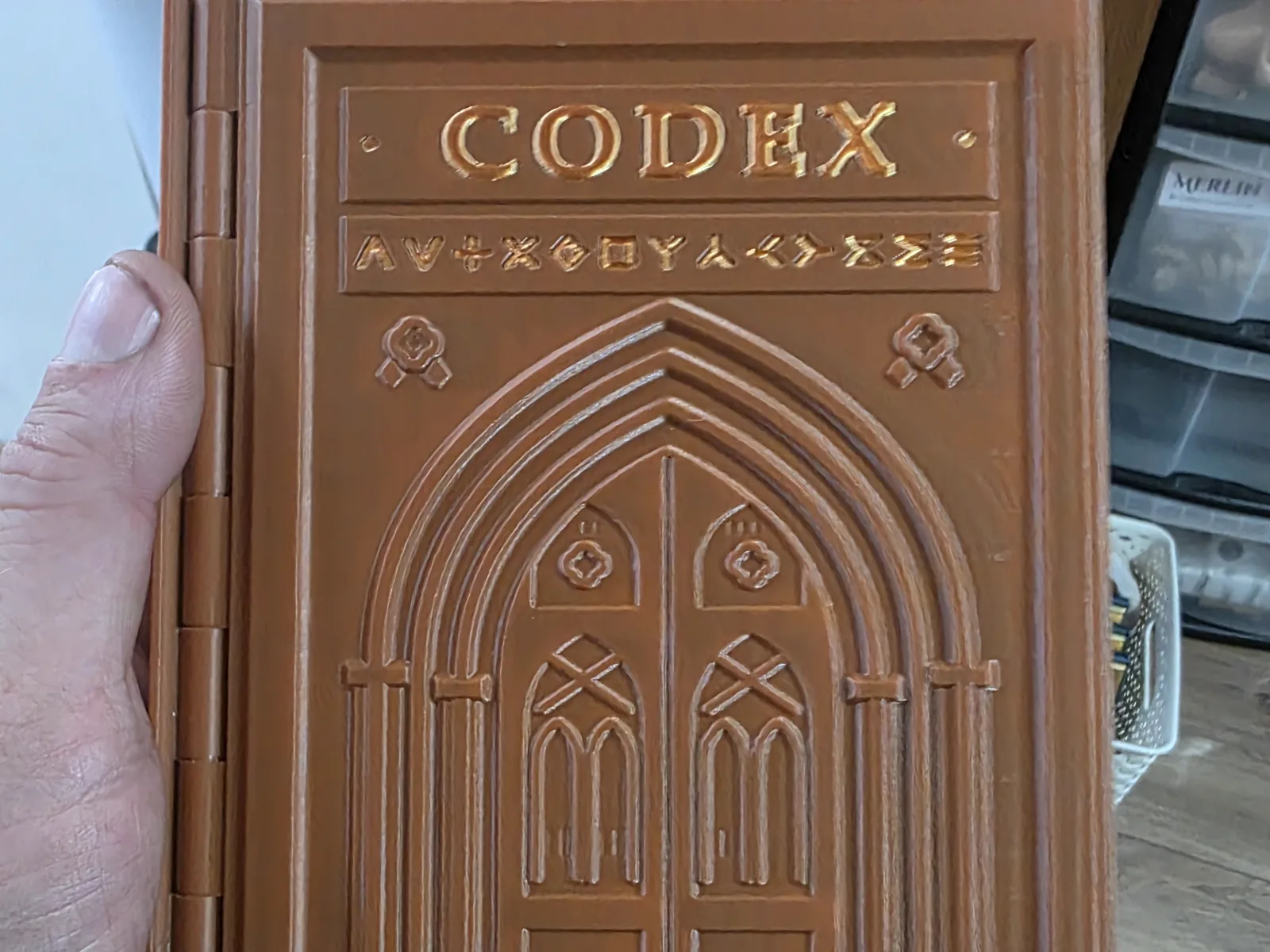
Prototype photograph · 10 September 2026A more developed cover, photographed after the earlier grey shells.
The Codex becomes recognisable
Later prints brought the cover, spine and decorative language together. A complete prototype printed successfully overall, giving the project a real object to hold rather than only a design on screen.
What it showed: the visual language was coming together; measured fit, repeated handling and durability were still separate questions.
Tools & printed puzzles
Prototype photographs · 10–11 September 2026Books and prototype tools gathered on the bench in their real development order.
The case becomes more than a cover
Wheels, rulers, frames and other test pieces began to sit beside the books. The aim is not a collection of unrelated prints, but a set of objects that earn their place in the investigation.
Where this stood: the parts were prototypes; assembly, fit, reset and uncoached play still needed real-world evidence.
The Codex milestone
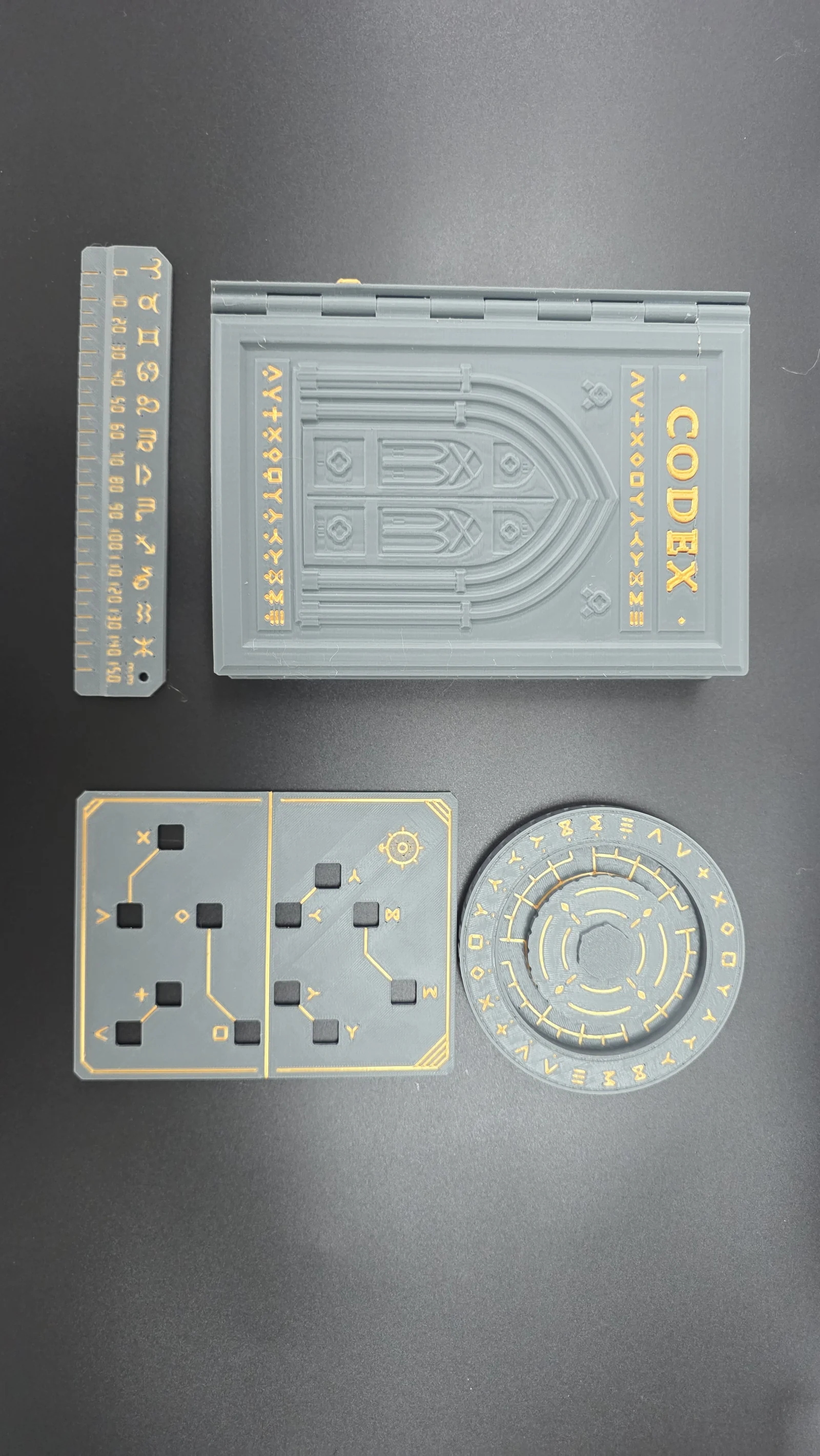
Prototype photograph · 14 September 2026A new unretouched photograph of the completed Codex and its core tools. The exact pictured revisions are not identified from appearance alone.
The Codex is complete
After successive printed revisions, Jon marked the reusable Codex itself complete. The photograph brings the physical book, ruler, grille and wheel into one frame.
What this means: the recurring book and its core tools have reached their chosen form. Release files and whole-experience testing remain separate work.
Player guidance
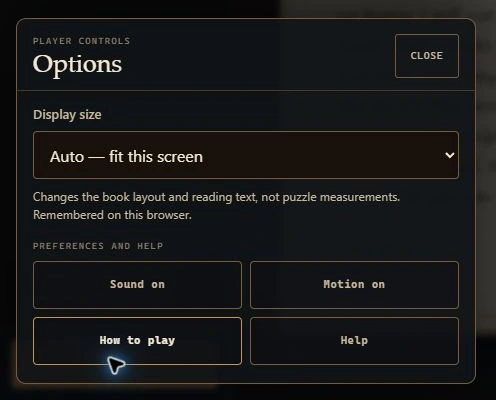
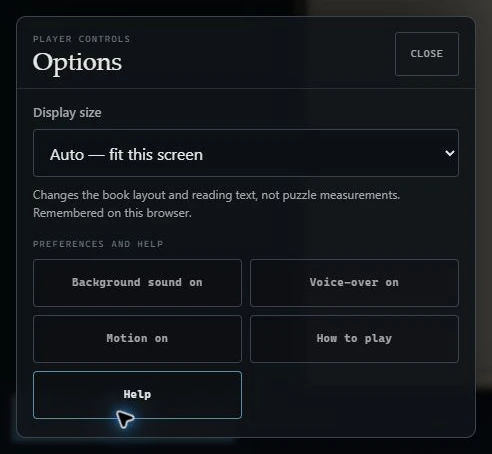
Current representative screenshotA representative Options capture used in the 14 September guide. It is not an archival view from when the controls were first built.
Showing how the game works
The public guide now uses real, spoiler-safe game screens to introduce the book, room exploration and player controls before somebody begins.
Why this helps: new players can understand the shape of The Apprentice’s Test without being shown how any puzzle is solved.
Personal Library prototype
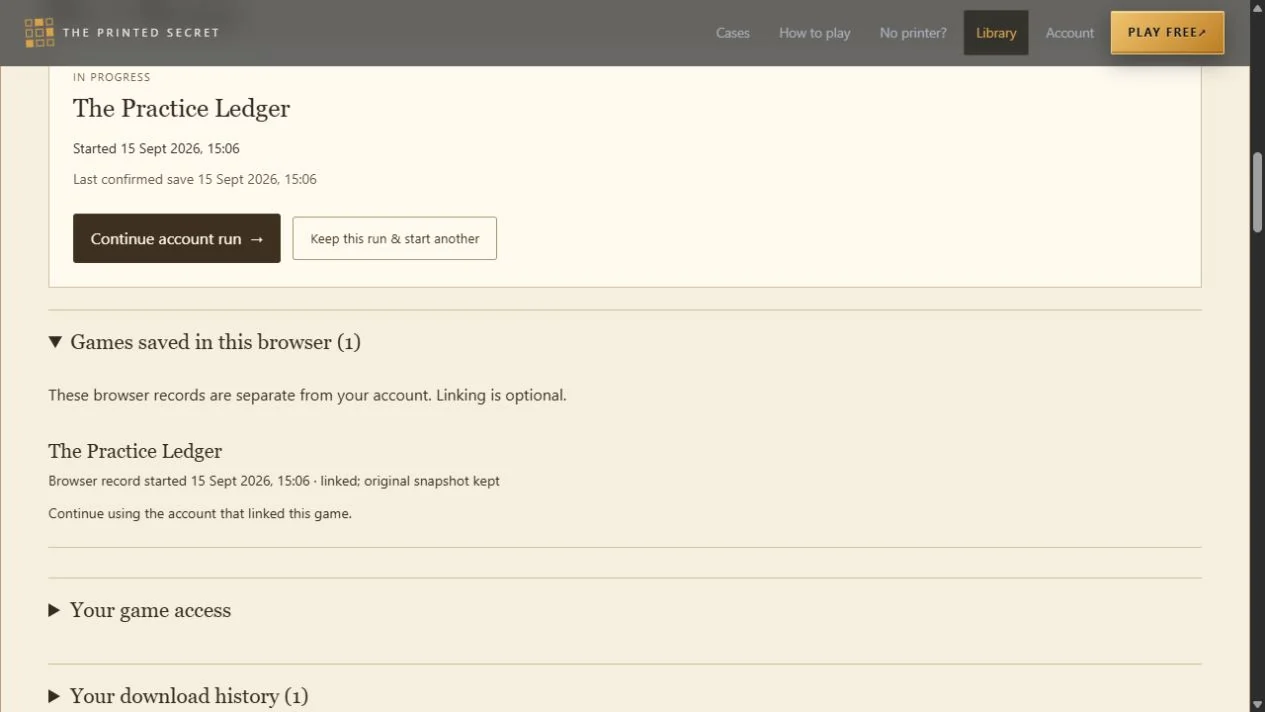
Development screenshot · synthetic dataThe Practice Ledger and its saved run are invented. No real player account or private history is shown.
A place to keep progress
A personal Library now brings saved games, earlier investigations and download history together in local development.
What was proved locally: a saved run, revealed hint, completion keepsake and exact-edition download history can return after reload. This is not yet a public account service.
After the final page
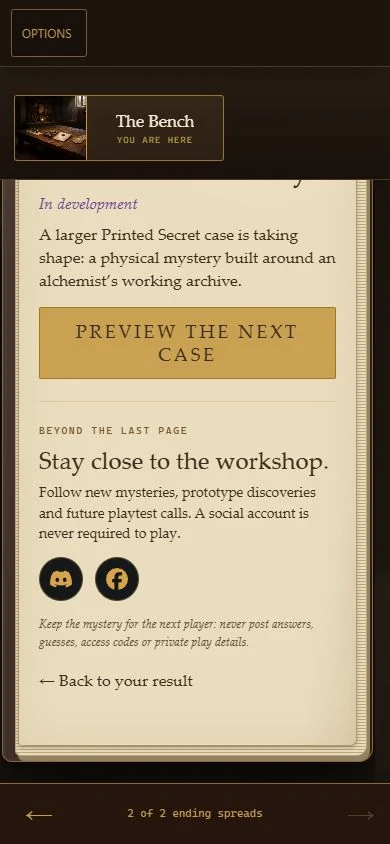
Development screenshot · synthetic completed stateA dated synthetic completion capture. The gold social icons are informational until real approved destinations exist.
Keeping the workshop optional
The final book page now offers a small invitation to follow future mysteries and playtest calls, while the next mystery remains the main action.
What stays true: no social account is required to play, and the invitation stays non-interactive until real links are approved.
Game UI and sound
Representative development screenshot · captured 30 September 2026.Shared controls with invented text; the changes were developed during 18–26 September.
Making the pages easier to follow
The browser book has been getting easier to read and listen to. Earlier pages remain available to revisit, narration follows the text, and voice and background sound now have separate controls. The aim is to let the interface support the investigation without getting in its way.
What changed: clearer reading controls and more choice over how to listen, with saved progress retained.
Apprentice milestone
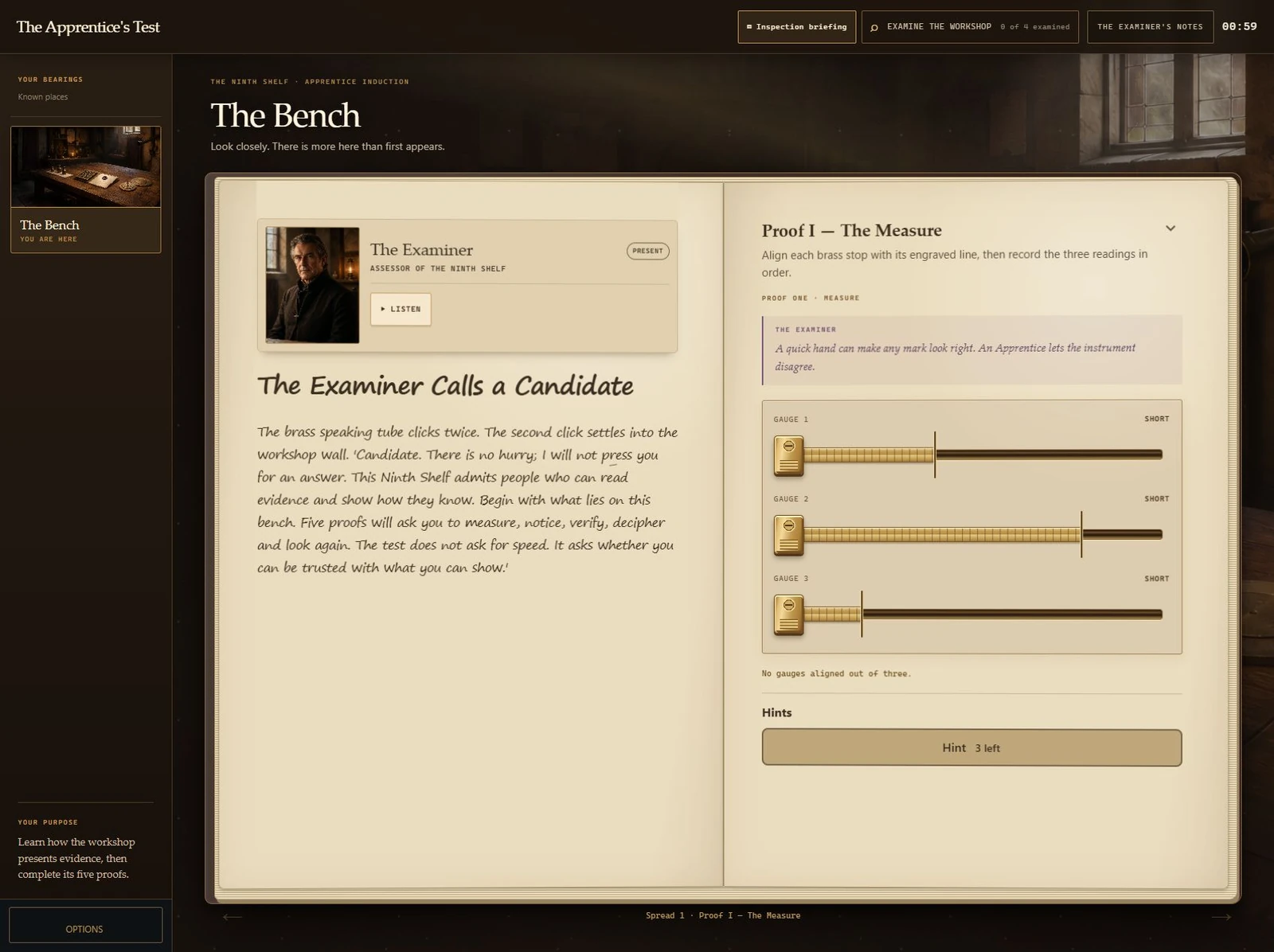
Development screenshot · 27 September 2026.The Apprentice opening; this is the creator’s build, not an independent playtest.
Playing the Apprentice all the way through
I played through the latest desktop build of The Apprentice’s Test, bringing its characters, narration, reading and investigation together in one run. It remains the free browser introduction, with no printer or physical book needed.
What this established: a complete creator desktop run. The next useful test is somebody meeting the game for the first time.
Books and printing
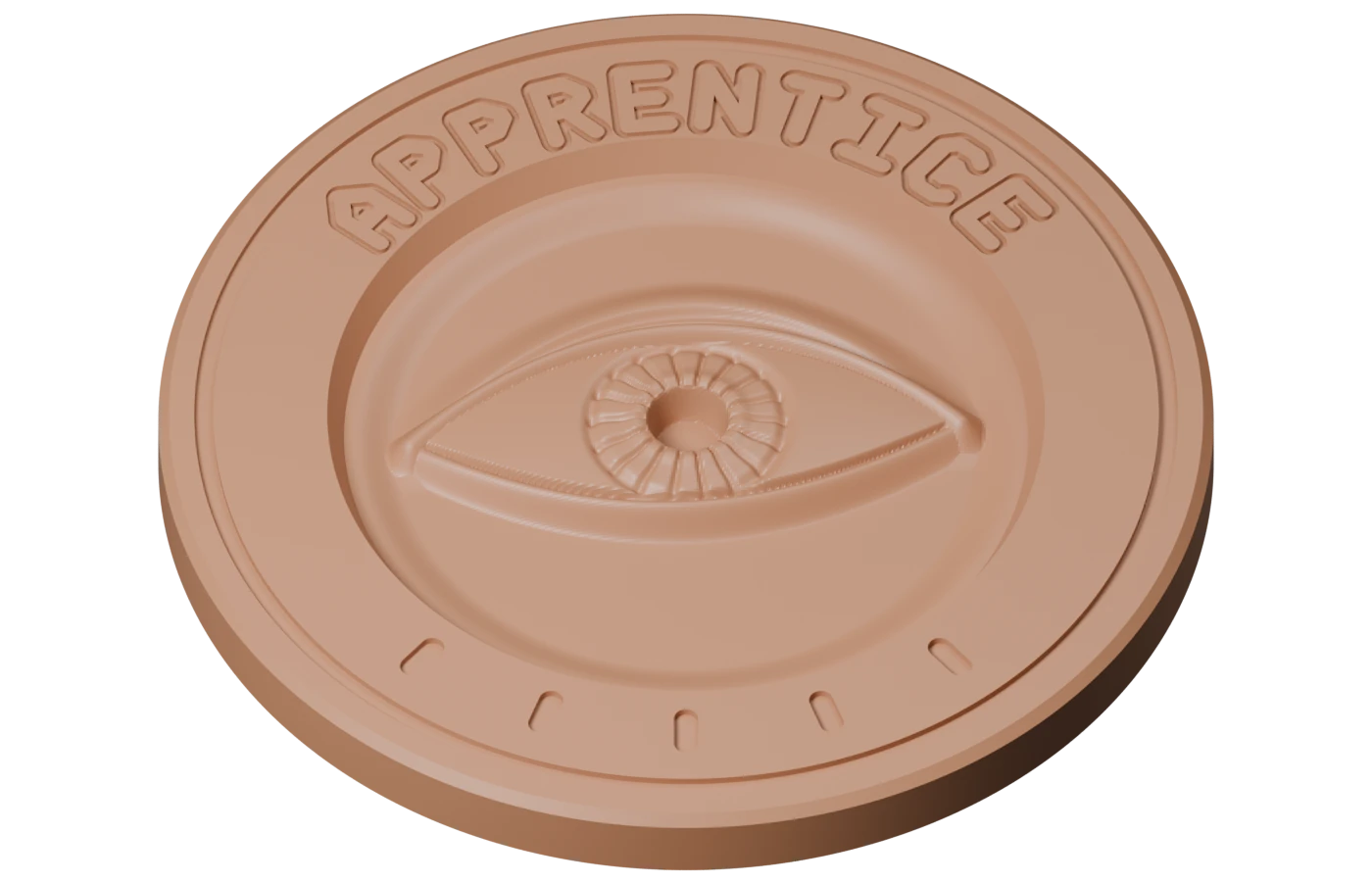
Model preview · selected single-colour design.This render is not a photograph of the reported print.
Giving the prints a simpler option
The Apprentice’s printed mark now has a selected single-colour version alongside the original multicolour file. I printed the single-colour version and it came out okay. The optional mark sits alongside the browser game; it is not required to play.
What comes next: checking the same parts on other printers and through repeated handling.
Alchemist game and puzzle design
Current study artwork · development illustration.An illustration of the study, not a photograph of the physical kit or a dated gameplay capture.
Bringing the study together
The Alchemist’s Study has been moving towards a more connected investigation: the opening, characters, evidence, puzzles and final pages now work together in the current development build. Alongside that, the book and tools are still being refined and test-printed.
Where it stands: a development game to test, with physical pieces and independent play still to prove. It is not on sale.
Keeper direction and next playtests
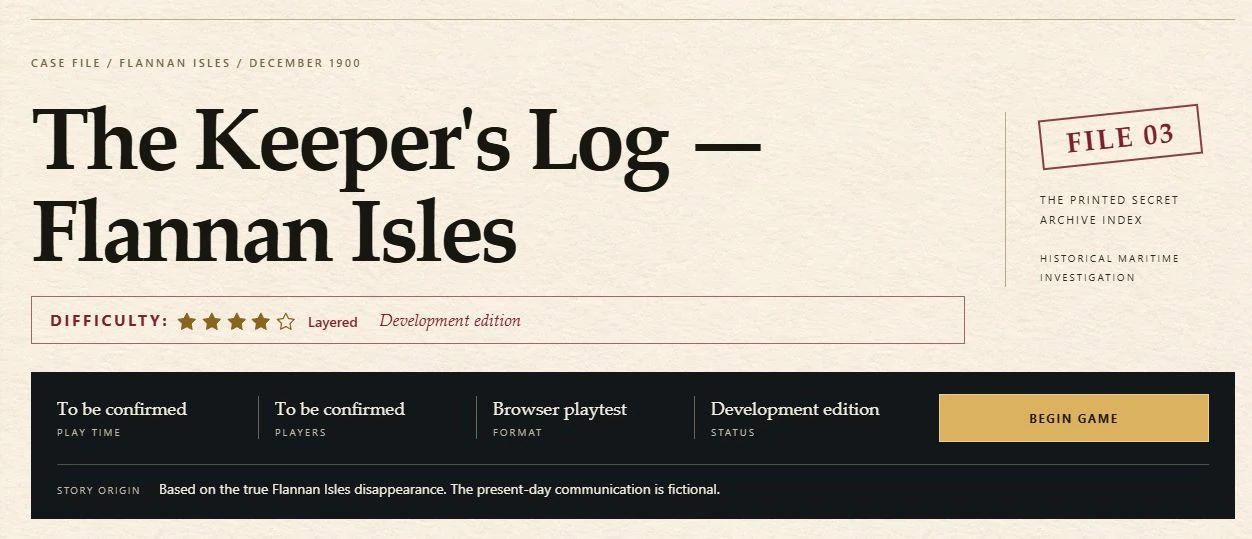
Representative development screenshot · 30 September 2026.Current Flannan Isles case introduction; physical pieces and final art remain in development.
A new direction for the Keeper
The Keeper’s Log is now being developed around the Flannan Isles disappearance. The surviving accounts form the historical foundation, with fictional present-day communication clearly identified as part of the game. A local development edition is ready for review, and a new invitation system lets selected testers send feedback as they work through a case.
The next step: unfamiliar players, clearer evidence and more physical testing. The game remains in development and is not on sale.
Next on the bench
Putting the whole experience into play.
The next stage is to let people who did not build the games try them, while the physical pieces continue through printing, handling and reset tests.
The Apprentice’s Test is the free browser introduction. Check each case file for availability and preparation.
These are development notes, not assembly instructions or puzzle clues. Designs may change; a render or a passing digital check is not proof of a successful print.